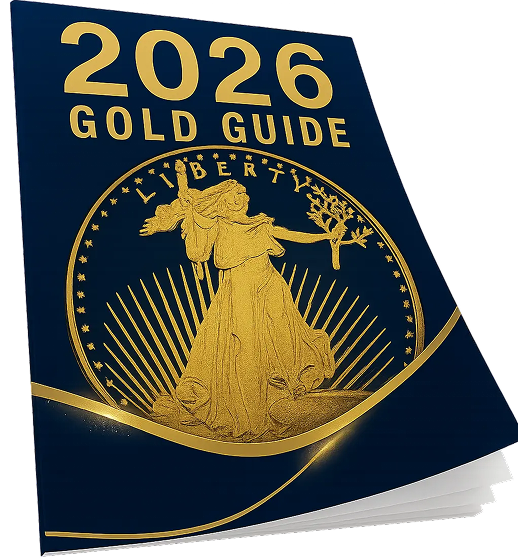

If you are exploring a Precious Metals IRA, one of the first questions your advisor should answer is: what types of gold are actually allowed? The IRS does not permit every form of gold inside a self-directed IRA. Specific fineness thresholds and coin designations govern what qualifies. Understanding those rules protects you from a costly mistake — holding a disqualified asset triggers an immediate taxable distribution, plus a potential 10% early-withdrawal penalty if you are under 59½.
The IRS Rule That Governs IRA-Approved Gold
The governing law is Internal Revenue Code Section 408(m)(3), which establishes the “exception for certain coins and bullion.” Under this provision, your self-directed IRA custodian can hold gold in two forms: specified U.S. Treasury-minted coins, and gold bullion that meets a minimum fineness standard tied to regulated futures contracts.
The fineness threshold for gold bullion reflects the standard required by the COMEX (the commodity exchange on which regulated gold futures contracts trade). That standard is .9950 fine, meaning the metal must be at least 99.5% pure gold. Bars and rounds from any sovereign or private mint qualify — as long as they meet that fineness floor and are held by an IRS-approved custodian, not by you personally.
IRA-Approved Gold Coins: The Statutory List
Section 408(m)(3)(A) permits specific U.S. coins without requiring the .9950 fineness test. These include gold coins described in paragraphs (7), (8), (9), and (10) of 31 U.S.C. §5112(a) — the American Gold Eagle series. This is a meaningful exception worth understanding.
- American Gold Eagle (1 oz, ½ oz, ¼ oz, 1/10 oz) — 22-karat (.9167 fine). Explicitly authorized by statute. The most widely held IRA gold coin in the U.S.
- American Gold Buffalo (1 oz) — 24-karat (.9999 fine). Exceeds the .9950 threshold; qualifies as bullion under Section 408(m)(3)(B).
- American Gold Eagle Proof editions — The same statutory authorization applies to proof versions, which are collector-finish strikes of the standard coins.
- Coins issued under state law — Section 408(m)(3)(A)(iv) also allows coins issued by any U.S. state, such as the Colorado state gold note series, provided they meet applicable standards.
IRA-Approved Gold Bars and Rounds
Gold bullion bars and rounds — from any mint — qualify if they carry a fineness of .9950 or higher and are held in an approved depository. Popular qualifying products include the one-ounce Canadian Gold Maple Leaf (.9999 fine), the South African Gold Krugerrand in modern bullion form (now struck at .9999), the Austrian Gold Philharmonic (.9999 fine), and institutional-grade gold bars from COMEX-registered refiners such as Valcambi, PAMP Suisse, and Perth Mint.
A note on older Krugerrands: the Krugerrand’s classic composition is 22-karat (.9167 fine), similar to the Gold Eagle. Because the Krugerrand is not specifically listed in the U.S. statute the way American Eagles are, it does not benefit from the explicit statutory carveout — and opinion varies on whether it qualifies. Most custodians treat the modern .9999 Krugerrand as acceptable bullion while declining to hold the classic 22-karat version. Confirm with your custodian before purchasing.
What Is Not Allowed: Common Disqualifying Assets
IRC Section 408(m)(2) treats most collectibles as distributions when placed in an IRA. That category includes:
- Rare or numismatic coins graded by PCGS or NGC — the IRS views their collectible premium as separating them from standard bullion
- Pre-1933 U.S. gold coins (Double Eagles, Saints, etc.) — valuable items, but not permitted inside an IRA
- Gold jewelry, art objects, or gold-plated items of any kind
- Gold ETFs or gold futures contracts — these are financial instruments, not physical metal held under Section 408(m)(3)
- Gold rounds from unverified or non-assayed mints that cannot document fineness
Placing any of these inside your self-directed IRA custodian’s account triggers the prohibited transaction rules. The IRS treats the purchase price as a taxable distribution in the year of investment.
The Custodian Rule: Why You Cannot Hold IRA Gold at Home
IRS Publication 590-B states clearly: coins and bullion held in a self-directed IRA must be in the physical possession of the custodian or trustee of the IRA. If you — the IRA owner or a beneficiary — personally take possession of the coins, the IRS treats that as an immediate distribution. At current gold prices near $4,277 per ounce (as of September 2026), even a single one-ounce Gold Eagle held at home triggers a taxable event on the full market value, plus potential penalties.
This requirement is not a technicality. It is the structural foundation that makes a Precious Metals IRA a retirement account rather than personal bullion storage. Approved custodians hold your metals in an IRS-compliant depository — typically an insured, segregated vault such as Brinks, Delaware Depository, or International Depository Services. Your IRA owns the metal; the custodian holds it on your IRA’s behalf.
Why the Fineness Standards Matter Practically
The .9950 minimum for gold is not an arbitrary number. It reflects the quality standard that regulated futures markets require for deliverable metal — a market-tested benchmark for liquidity and authenticity. When you hold qualifying bullion, you hold metal that the world’s most active commodity exchanges accept at par. That translates to straightforward valuation, transparent pricing at any market day, and a recognized buyback market.
At September 2026 spot prices — gold near $4,277 per ounce and silver near $62.95 per ounce — the buyback market for COMEX-eligible bullion is orderly and competitive. Metal that does not meet those standards is priced differently and sells into a narrower market.
Silver, Platinum, and Palladium in a Self-Directed IRA
Section 408(m)(3) extends the same framework to other metals, each with its own fineness floor:
- Silver: .999 fine minimum (99.9%). American Silver Eagles (statutory carveout, struck at .999), Canadian Silver Maple Leafs (.9999), and qualifying silver bars all meet this standard.
- Platinum: .9995 fine minimum (99.95%). American Platinum Eagles are explicitly authorized; platinum bars at .9995 or better also qualify.
- Palladium: .9995 fine minimum (99.95%). American Palladium Eagles and qualifying palladium bars meet the standard. Palladium is the least commonly held of the four metals in retail IRAs.
Most Precious Metals IRA holders concentrate in gold and silver. Platinum and palladium offer legitimate portfolio diversification within the tax-advantaged wrapper, though their markets are smaller and their industrial demand cycles differ significantly from the monetary metals.
Frequently Asked Questions About Gold in an IRA
Q: Can I put my existing gold coins into my IRA?
Not directly. You cannot contribute physical gold you already own to an IRA. Contributions to a self-directed IRA must be in cash (unless it is a rollover from another qualified retirement account). Your custodian then purchases the approved bullion on behalf of your IRA using those funds.
Q: Are American Gold Eagles really IRA-eligible if they are only 22-karat?
Yes. IRC Section 408(m)(3)(A) explicitly names the gold coins described in 31 U.S.C. §5112(a)(7)–(10), which are the American Gold Eagle denominations. The statutory carveout overrides the general fineness test. Eagles have been IRA-eligible since the Tax Reform Act of 1986.
Q: Can I store my IRA gold in a safe at my home or bank?
No. IRS Publication 590-B is explicit: the metal must remain in the physical possession of your IRA’s custodian or trustee. Home storage — regardless of how secure — constitutes a prohibited transaction. Multiple court cases and IRS guidance letters have confirmed this. Any arrangement marketed as “home storage IRA gold” carries significant legal and tax risk.
Q: What happens if I accidentally put a non-qualifying coin in my IRA?
The IRS treats the purchase amount as a taxable distribution in the year the purchase was made. If you are under 59½, a 10% early-withdrawal penalty also applies. Work with a custodian who verifies eligibility before purchasing, rather than discovering an error at tax time.
Q: Can I take physical delivery of my IRA gold when I retire?
Yes. When you begin taking required minimum distributions (RMDs) or elect to distribute assets, you can instruct your custodian to deliver the physical metal rather than sell it and send cash. The fair market value of the metal at the time of distribution is the taxable amount. This is one reason many investors prefer holding well-known, highly liquid coins — they distribute and transfer cleanly.
A Note on Selecting Qualifying Products
Your custodian serves as the first line of verification — they will only purchase qualifying metals on behalf of your IRA. However, working with an advisory firm that understands the distinction between eligible and ineligible products before you speak with the custodian saves time and prevents confusion. The difference between a proof American Gold Eagle (eligible) and a certified rare numismatic coin (not eligible) is not always obvious to a first-time buyer, and some marketing in this industry blurs that line deliberately.
A straightforward approach: focus on widely recognized one-ounce sovereign bullion coins and COMEX-eligible bars. American Gold Eagles, American Gold Buffalos, Canadian Gold Maple Leafs, and institutional gold bars from LBMA-accredited refiners represent the mainstream of Precious Metals IRA holdings — liquid, recognizable, and unambiguously compliant.
Conclusion
The IRS framework for IRA-eligible gold is specific but navigable. Gold bullion at .9950 fineness or better qualifies as bullion under IRC §408(m)(3)(B). American Gold Eagles qualify by explicit statutory authorization regardless of their 22-karat composition. All holdings must remain in the physical possession of your IRA’s custodian in an approved depository. Numismatic coins, jewelry, and home-stored metal fall outside the rules entirely.
Understanding exactly what you own — and that it qualifies — is part of the transparency that responsible precious metals advisors provide from the first conversation. If you have questions about which specific products are eligible for your self-directed IRA, or how the rollover and custodian process works, speaking with an experienced advisor before making any purchase is the right first step.
Sanctuary Metals is a dealer in physical precious metals. We are not a licensed investment adviser. Nothing here constitutes financial, legal, or tax advice. Precious metals involve risk, including possible loss of principal. Past performance is not indicative of future results. Consult a qualified financial professional before making any investment decision.