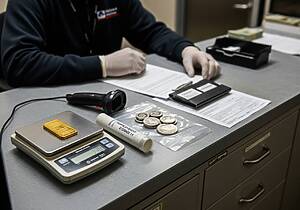

A precious metals IRA is a type of self-directed IRA that allows you to hold physical gold, silver, platinum, or palladium inside a retirement account instead of traditional assets like stocks and bonds. In simple terms, it works like a traditional or Roth IRA for tax purposes, but the underlying investments are IRS approved metals stored in a secure depository. Investors use this structure to diversify retirement savings and reduce reliance on paper-based assets.
Understanding how this account works is essential before deciding whether it fits your long-term retirement plan.
What is a Precious Metals IRA?
To understand what is a precious metals IRA, it helps to start with the broader concept of an IRA. An Individual Retirement Account is a tax-advantaged account designed to help individuals save for retirement. Traditional IRAs may offer tax-deductible contributions, while Roth IRAs allow qualified tax-free withdrawals.
A precious metals IRA is simply a version of a self directed IRA. A self directed IRA allows the account holder to invest in a wider range of assets beyond mutual funds and publicly traded securities. These can include real estate, private equity, and physical precious metals.
In this case, the account holds physical bullion coins or bars that meet strict IRS standards for purity and authenticity. These metals are not stored at home. They must be held by an approved custodian and stored in an IRS-approved depository.
Gold IRA Definition and How It Fits In
Many investors use the term “gold IRA” when discussing precious metals IRAs. The gold IRA definition is straightforward: it is a self directed IRA that holds gold bullion or gold coins meeting IRS requirements. However, a gold IRA can also include other precious metals such as silver, platinum, and palladium, provided they qualify under IRS guidelines.
Gold tends to receive the most attention because of its long history as a store of value and hedge against currency risk. Still, the broader category of precious metals IRA can include several types of metals, offering some diversification within the metals allocation itself.
How a Precious Metals IRA Works
The structure of a precious metals IRA involves several key parties and steps.
First, the account must be opened with a custodian that specializes in self directed IRAs. Traditional brokerage firms typically do not offer physical metals inside IRAs, so investors must work with a custodian experienced in alternative assets.
Second, once the account is funded—either through contributions, a transfer, or a rollover from an existing retirement plan—the account holder selects the metals to purchase. These must be IRS approved metals, meaning they meet specific purity standards. For example, gold must generally be 99.5 percent pure to qualify, with certain government-issued coins allowed as exceptions.
Third, the metals are purchased through a dealer and shipped directly to a secure, IRS-approved depository. The investor does not take personal possession. The custodian maintains records, handles reporting requirements, and ensures compliance with IRS rules.
From a tax perspective, the account follows the same rules as any other IRA. Traditional precious metals IRAs are funded with pre-tax dollars, and withdrawals are taxed as ordinary income in retirement. Roth versions are funded with after-tax dollars, and qualified withdrawals are tax-free. Required minimum distributions apply to traditional accounts beginning at the appropriate age.
Rules and IRS Approved Metals
One area that often causes confusion is what qualifies as eligible metal. The IRS sets specific guidelines for purity.
- Gold must generally be at least 99.5 percent pure.
- Silver must be 99.9 percent pure.
- Platinum and palladium must typically meet a 99.95 percent purity standard.
Certain well-known bullion coins are allowed, while most collectible or numismatic coins are not. The IRS focuses on bullion-grade investments rather than rare coin speculation.
Another important rule is that the investor cannot store the metals at home or in a personal safe deposit box. Doing so could be treated as a withdrawal, triggering taxes and possibly penalties. Proper custody through an approved depository is a central requirement.
Why Investors Consider Precious Metals in Retirement
Retirement investors often ask what role physical metals should play in a long-term portfolio.
Precious metals are not designed to generate income like dividend-paying stocks or bonds. Instead, they are often used as a form of diversification. Historically, gold and other metals have behaved differently from equities and fixed income assets, particularly during periods of inflation, currency weakness, or financial stress.
By holding a portion of retirement savings in physical metals, some investors aim to reduce overall portfolio volatility and hedge against purchasing power erosion. However, metals can experience price swings of their own, and they do not guarantee protection against loss.
A precious metals IRA is typically used as a complementary holding within a broader retirement plan rather than a replacement for diversified investments.
Costs and Considerations
Investors should also understand the unique costs associated with these accounts.
In addition to standard IRA administrative fees, precious metals IRAs involve storage fees charged by the depository and sometimes transaction premiums when buying or selling bullion. These costs can be higher than those associated with traditional brokerage IRAs.
Liquidity is another consideration. While bullion can generally be sold through dealers, it is not as instantly liquid as a publicly traded stock. The sale process involves contacting the custodian and arranging a transaction through an approved channel.
Careful evaluation of total costs, long-term goals, and risk tolerance is essential before committing retirement funds to physical metals.
FAQ
Is a precious metals IRA the same as a self directed IRA?
A precious metals IRA is a specific type of self directed IRA. A self directed IRA allows you to invest in alternative assets beyond stocks and mutual funds. Precious metals are one of those alternatives. Not all self directed IRAs hold metals, but all precious metals IRAs are structured as self directed accounts because traditional custodians typically do not support physical bullion investments.
What types of metals can be held in a precious metals IRA?
The IRS allows gold, silver, platinum, and palladium, provided they meet strict purity standards. These must be bullion coins or bars classified as IRS approved metals. Most collectible coins are not eligible, even if they contain gold or silver. The focus is on investment-grade bullion that meets minimum fineness requirements.
Can I store my IRA gold at home?
No. IRS regulations require that metals in an IRA be stored in an approved depository under the custody of a qualified trustee. If you take personal possession of the metals, the IRS may treat it as a distribution. That could trigger income taxes and, if you are under the eligible age, early withdrawal penalties. Proper storage through a custodian is not optional; it is a compliance requirement.
How is a precious metals IRA taxed?
Taxation depends on whether the account is structured as a traditional or Roth IRA. In a traditional precious metals IRA, contributions may be tax-deductible, and withdrawals in retirement are taxed as ordinary income. In a Roth structure, contributions are made with after-tax dollars, and qualified withdrawals are tax-free. The metal itself does not change the tax treatment; the IRA structure determines how taxes are applied.
Is a precious metals IRA suitable for every investor?
Not necessarily. Precious metals can provide diversification and may act as a hedge in certain economic conditions. However, they do not produce income and can be volatile over shorter periods. Because of storage costs and account fees, they are generally best used as a portion of a diversified retirement portfolio rather than the entire strategy. Investors should weigh their time horizon, income needs, and overall asset allocation before deciding how much exposure to include.