What is spot price gold?
The spot price of gold is the current market price at which gold can be bought or sold for immediate delivery. Essentially, it is the live price quoted in global financial markets for one troy ounce of pure gold, before adding dealer premiums, commissions, or fabrication costs. When people ask, “what is spot price gold,” they are asking about the benchmark price that forms the foundation for nearly all gold transactions worldwide.
Understanding the gold spot price is essential for retirement investors who are considering gold as part of a diversified portfolio. It is the starting point for evaluating coins, bars, gold-backed ETFs, and even mining stocks. That said, it is only part of the picture.
How the spot price of gold is determined
Specifically, the gold spot price is established through continuous trading in global financial markets. Gold trades around the clock on major exchanges such as the COMEX in New York and in over-the-counter markets in London and other financial centers. The price is influenced by real-time supply and demand from institutional investors, central banks, refiners, jewelry manufacturers, and individual traders.
Large financial institutions buy and sell gold contracts in significant volumes, which helps create a transparent market quotation. In particular, these transactions reflect investor expectations about inflation, interest rates, currency strength, geopolitical risk, and overall economic conditions.
Because this trading occurs globally and nearly nonstop, as a result, the gold spot price can change from minute to minute. News about inflation reports, central bank policy decisions, or global instability can quickly move the market.
Spot price versus physical gold prices
In practice, many investors are surprised to learn that the price they pay for a gold coin or bar is not exactly the spot price. The gold spot price represents the value of raw, unfabricated gold in its pure form. When you purchase physical gold, you also pay a premium.
This premium covers several factors:
- Minting and fabrication costs
- Transportation and insurance
- Dealer overhead and profit
- Market demand for certain products
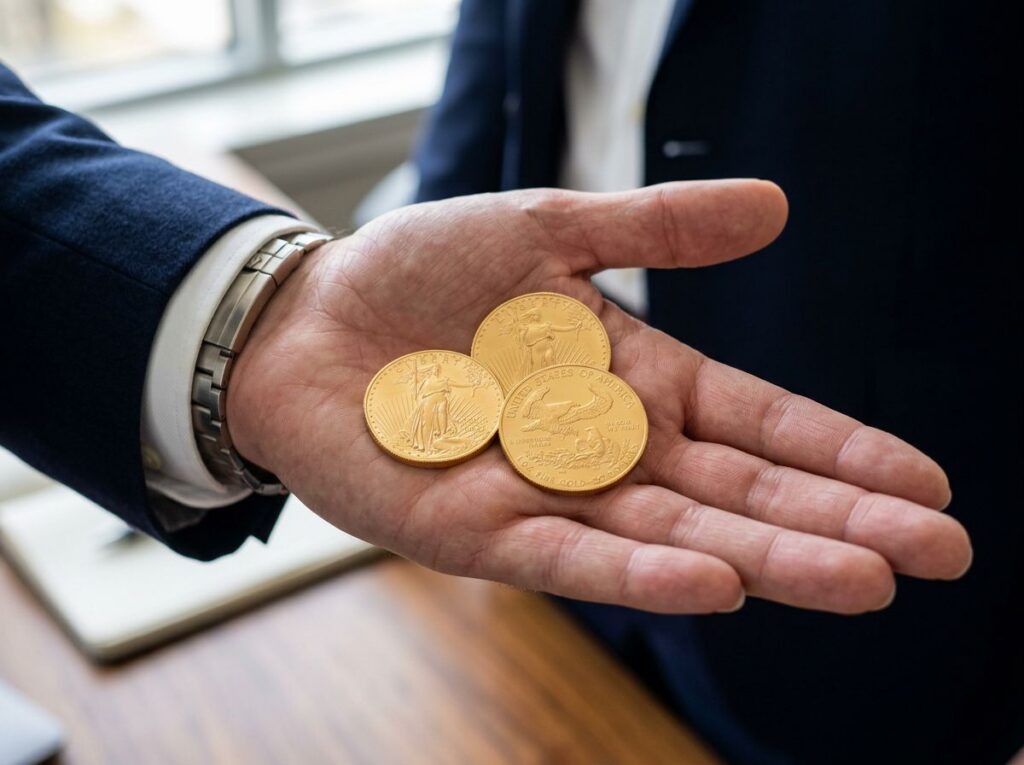
To illustrate, if the spot price is $2,000 per ounce, a one-ounce gold coin might sell for $2,080 or more. That additional amount reflects the premium, not a change in the underlying gold spot price.
Therefore, understanding this difference is critical for retirement investors. The spot price gold quotation is the baseline, but your actual investment cost includes these additional expenses.
Why the gold spot price matters for retirement planning
Gold is often used in retirement portfolios as a hedge against inflation, currency risk, and financial market volatility. When evaluating whether gold makes sense in a long-term allocation, the spot price plays a central role.
First and foremost, it helps determine value. By tracking historical gold spot prices, investors can see how gold has performed during different economic cycles. For example, gold has often risen during periods of high inflation or financial stress.
Second, the spot price affects the valuation of gold-related investments. For instance, gold exchange-traded funds (ETFs) closely track the gold spot price. Mining stocks are also influenced by it, since a miner’s profitability depends in part on the current price of gold.
Furthermore, monitoring the gold spot price in context helps investors avoid emotional decisions. Gold, like any asset, can experience periods of rapid price increases or sharp corrections. Retirement investors benefit from viewing gold as a strategic allocation rather than a short-term trade based solely on daily price swings.
What influences changes in the gold spot price
Several major factors influence the gold spot price over time.
Above all, inflation expectations are one of the most important drivers. When investors believe that paper currency is losing purchasing power, demand for gold tends to increase.
Interest rates also play a key role. Gold does not pay dividends or interest. When interest rates rise significantly, income-producing assets may appear more attractive compared to gold. In contrast, when rates are low or negative after inflation, gold becomes relatively more appealing.
Notably, gold is typically priced in U.S. dollars. When the dollar weakens, gold often rises in dollar terms because it becomes less expensive for foreign buyers. When the dollar strengthens, gold prices can face pressure.
Geopolitical uncertainty can drive demand for gold as a perceived safe haven. Consequently, political instability, war, trade disputes, or financial crises may increase investor demand for physical gold, pushing the spot price higher.
For retirement investors, these influences reinforce the importance of viewing gold as part of an overall asset allocation strategy rather than reacting to every short-term market movement.
Understanding market quotation and transparency
The gold spot price is considered a transparent market quotation because it is based on standardized contracts and widely reported across financial news outlets and trading platforms. Prices are quoted in U.S. dollars per troy ounce, though they can also be converted into other currencies.
Accordingly, reputable dealers use this publicly available gold spot price as the baseline for pricing physical gold products. Moreover, investors should always confirm that any quote they receive clearly states the premium above spot. Transparency around this difference signals a professional and trustworthy transaction.
For retirement accounts such as a self-directed IRA that holds physical gold, custodians and depositories also use the prevailing spot price to help value account holdings for reporting purposes.
The long-term perspective on spot price gold
When retirement investors ask what is spot price gold, they are often trying to determine whether gold is “expensive” or “cheap.” Rather, gold’s role in a portfolio is less about short-term valuation and more about long-term risk management.
Indeed, gold has historically maintained purchasing power over extended periods, even if it experiences multi-year cycles of rising and falling prices. The spot price reflects current market sentiment, but retirement planning requires a broader perspective that includes time horizon, income needs, tax considerations, and diversification goals.
Ultimately, understanding how the gold spot price works allows investors to make measured decisions rather than reacting to headlines.
Frequently Asked Questions
How often does the gold spot price change?
The gold spot price changes continuously during global trading hours, effectively 24 hours a day from Sunday evening through Friday afternoon U.S. time. Prices can update every few seconds as trades occur. For long-term retirement investors, daily or even weekly price fluctuations are usually less important than broader trends over months or years.
Is the spot price the same everywhere in the world?
The spot price represents a global benchmark, so it is largely consistent worldwide. However, local physical gold prices may vary slightly based on currency exchange rates, taxes, import duties, and regional supply and demand. The underlying gold spot price explained in international markets remains the reference point across countries.
Why is there a difference between spot price and futures price?
The spot price reflects the cost of gold for immediate delivery. A futures price is the agreed-upon price for delivery at a specified date in the future. Futures prices may be slightly higher or lower than spot due to interest rates, storage costs, and market expectations. For most retirement investors buying physical gold or gold ETFs, the spot price is the more relevant benchmark.
Does the gold spot price predict future performance?
The gold spot price is a snapshot of current market conditions, not a forecast. While trends can develop over time, no single price reading predicts where gold will go next. Retirement investors should evaluate gold based on long-term diversification benefits rather than attempting to time short-term price movements.
How can I track the spot price of gold?
You can track the gold spot price through major financial news websites, commodity exchanges, and reputable precious metals dealers. Prices are typically listed in U.S. dollars per troy ounce and update frequently throughout the trading day. When reviewing a market quotation, make sure you understand whether it reflects the live spot price and how any premiums are applied if you are considering a purchase.