What Is a Gold ETF vs Physical Gold?
A gold ETF is a financial fund that trades on a stock exchange and is designed to track the price of gold, while physical gold is actual metal you own directly, usually in the form of coins or bars. For retirement investors, the main difference is ownership: a gold ETF gives you price exposure to gold through a brokerage account, whereas physical gold gives you direct possession or allocated ownership of bullion. Both can serve a role in a diversified retirement strategy, but they differ in liquidity, storage, costs, risks, and how they behave during financial stress.
Understanding the difference between a gold ETF and physical gold begins with the reason many investors consider gold in the first place. Gold is often used as a hedge against inflation, currency weakness, and market uncertainty. It does not pay dividends or interest, but it has a long history as a store of value. Therefore, the question is not simply whether gold is useful. The better question is which form of gold best fits your retirement goals, risk tolerance, and need for control.
How a Gold ETF Works
A gold ETF, or exchange-traded fund, is bought and sold like a stock. Investors can purchase shares through a regular brokerage account, IRA, or other investment platform. Most gold ETFs are structured to reflect the market price of gold, usually by holding bullion, futures contracts, or other gold-related assets.
In practical terms, a gold ETF is convenient. You can buy or sell shares during market hours, often with narrow bid-ask spreads and low transaction costs. This makes ETFs attractive for investors who want quick exposure to gold without arranging storage, insurance, or delivery.
However, ETF shares are not the same as owning coins or bars. In many cases, investors do not have the right to redeem ETF shares for physical metal. Instead, they own shares in a fund. The fund may hold gold, but the investor’s claim is financial rather than personal possession of bullion. In other words, a gold ETF is gold exposure, not direct gold ownership.
For retirement accounts, this convenience can be useful. Many traditional IRAs and brokerage-based retirement portfolios can hold gold ETFs easily. Furthermore, portfolio tracking and rebalancing are simple because ETF values appear alongside stocks, bonds, and mutual funds.
How Physical Gold Works
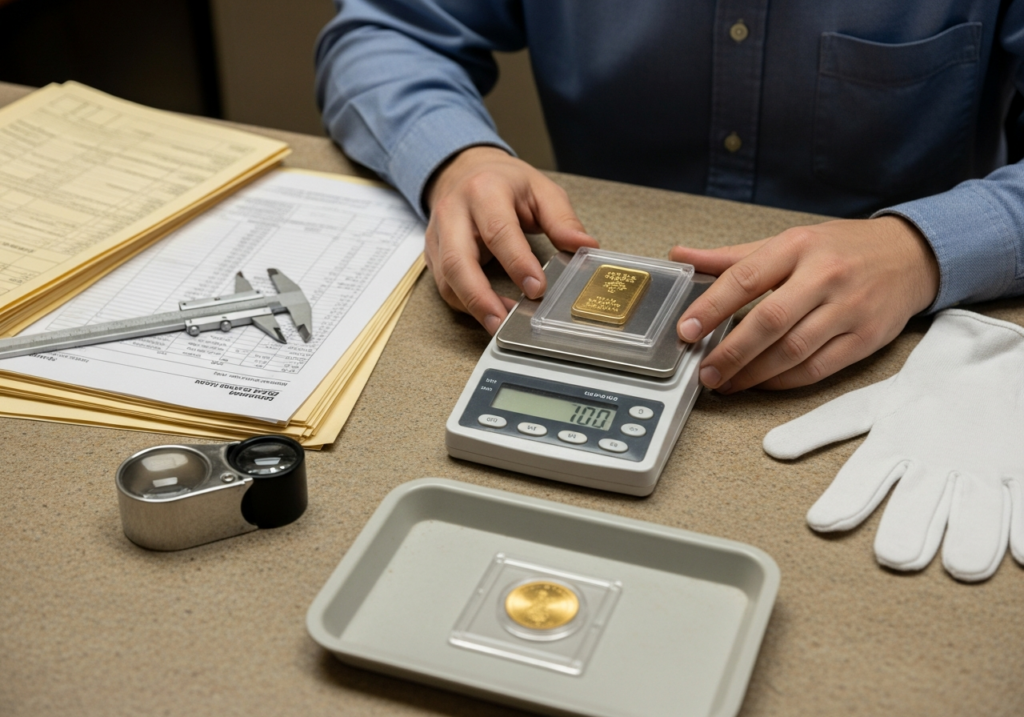
Physical gold means owning actual bullion, commonly in the form of government-minted coins, privately minted rounds, or bars. Investors may store it at home, in a safe deposit box, or with a professional vaulting service. In a self-directed IRA, physical gold must usually be held by an approved custodian and stored at an approved depository to preserve the account’s tax-advantaged status.
The appeal of physical gold is direct ownership. Unlike a fund share, a gold coin or bar is a tangible asset with no need for a stock exchange to prove that it exists. For this reason, some investors prefer bullion as a form of financial insurance.
Physical gold also avoids certain fund-related risks. There is no annual ETF expense ratio, no fund sponsor to evaluate, and no share structure to understand. Nevertheless, physical bullion has its own costs. You may pay dealer premiums when buying, shipping costs, storage fees, insurance costs, and bid-ask spreads when selling.
In addition, physical gold may take more planning to liquidate. Selling a gold ETF can be done in seconds through a brokerage platform. Selling bullion often requires contacting a dealer, verifying the product, agreeing on a price, and arranging delivery or transfer. As a result, physical gold is generally better suited for long-term holding than short-term trading.
ETF vs Physical Bullion: Key Differences for Retirement Investors
The ETF vs physical bullion decision often comes down to the purpose of the gold allocation. If the goal is simple portfolio diversification, a gold ETF may be enough. It allows an investor to gain exposure to gold prices while keeping assets inside a familiar investment account.
If the goal is direct control over a tangible asset, physical gold may be more appropriate. Some retirement investors view bullion as a reserve asset outside the paper financial system. This viewpoint becomes more important for those concerned about financial institutions, currency debasement, or broad market disruptions.
Liquidity is another major difference. Gold ETFs are generally more liquid during normal market conditions. Shares can be bought or sold quickly, and pricing is transparent. Physical gold is also liquid in the sense that there is a global market for it, but the selling process is less instant.
Costs should also be compared carefully. A gold ETF usually charges an annual expense ratio, which slowly reduces returns over time. Physical gold does not have an expense ratio, but it often carries higher upfront costs due to premiums over spot price. Moreover, secure storage and insurance may add ongoing expenses.
Taxes can differ as well. In a taxable account, gains from many gold ETFs and physical bullion may be taxed as collectibles, depending on the fund structure and current tax law. In retirement accounts, taxation depends on the type of account, such as traditional IRA, Roth IRA, or taxable brokerage account. Because rules can be complex, investors should review tax treatment with a qualified tax professional before making large allocations.
Pros and Cons of a Metal ETF
When comparing the pros cons metal ETF investors usually focus first on convenience. A gold ETF is easy to buy, easy to sell, and easy to track. It also avoids the practical issues of transporting and storing bullion. For investors who already manage a retirement portfolio online, this simplicity can be a meaningful advantage.
Another benefit is low minimum investment. You can buy a small number of ETF shares, or even fractional shares on some platforms. This allows investors to fine-tune their gold allocation without needing to buy a full one-ounce coin or bar.
However, the main drawback is that you do not personally hold the gold. You rely on the fund sponsor, custodian, market makers, and the structure of the fund. While major gold ETFs are often heavily regulated and widely used, they are still financial products. Consequently, they may not satisfy investors who want gold as a form of asset independence.
There can also be tracking differences. A gold ETF is designed to follow the price of gold, but fund expenses and structure can cause performance to vary slightly from the spot price. Over long periods, those small differences may matter.
Pros and Cons of Physical Gold
Physical gold’s greatest strength is direct ownership. A recognized gold coin or bar is not a promise to pay. It is the asset itself. This can be reassuring for investors who want part of their wealth held outside the traditional stock and bond system.
Physical bullion can also support long-term discipline. Because it is less convenient to trade, investors may be less tempted to buy and sell based on daily market noise. In particular, gold held as a strategic reserve is often best viewed over years, not weeks.
Yet physical gold requires careful handling. Storage must be secure. Insurance may be necessary. Authenticity matters. Investors should buy from reputable dealers and understand the difference between bullion products and collectible coins. Collectible or numismatic coins may carry large premiums that are not directly tied to gold content, which can make them less suitable for straightforward retirement diversification.
For IRA investors, physical gold comes with added rules. You cannot simply buy gold for an IRA and store it at home without risking tax problems. A self-directed gold IRA generally requires an approved custodian and depository. Therefore, the investor should understand account fees, storage fees, and distribution rules before proceeding.
Which Is Better for Retirement: Gold ETF or Physical Gold?
Neither choice is automatically better. A gold ETF may be better for investors who value liquidity, low friction, and simple portfolio management. Physical gold may be better for investors who value direct ownership, tangible assets, and long-term wealth preservation.
Ultimately, the best choice depends on the role gold is meant to play. If gold is a modest portfolio diversifier inside a retirement account, an ETF can be efficient. If gold is intended as a personal reserve asset for uncertain conditions, physical bullion may better match that purpose.
Many experienced investors separate these goals. They may use ETFs for tactical exposure and physical bullion for long-term security. In contrast, others prefer to keep things simple and choose one approach. The key is to avoid confusing convenience with control. A gold ETF offers convenience. Physical gold offers direct ownership.
How Much Gold Should Retirement Investors Consider?
Gold should usually be viewed as part of a broader retirement plan, not as a complete strategy by itself. A common allocation range is modest, often somewhere between 5% and 10% of investable assets, though the right amount depends on age, income needs, risk tolerance, and existing investments.
A retiree who depends on portfolio income may need to be cautious because gold does not produce cash flow. However, a younger investor worried about inflation or market concentration may use gold as a hedge alongside stocks and bonds.
The most prudent approach is to define the purpose first. Specifically, ask whether the gold allocation is meant to reduce volatility, hedge inflation, diversify away from financial assets, or provide emergency reserves. Once the purpose is clear, the choice between ETF and physical bullion becomes easier.
FAQ
Is a gold ETF backed by real gold?
Many major gold ETFs are backed by physical gold held in vaults, but the details depend on the specific fund. Some funds hold allocated bullion, while others may use futures contracts or other financial instruments. Investors should read the fund documents to understand what the ETF owns, who stores the gold, and whether shareholders have any redemption rights. In most cases, ordinary investors cannot exchange shares for coins or bars.
Can I hold physical gold in an IRA?
Yes, physical gold can be held in certain self-directed IRAs if it meets IRS purity standards and is stored by an approved depository through a qualified custodian. You generally cannot store IRA-owned gold at home without creating potential tax and penalty issues. In addition, gold IRAs often have setup, custodial, transaction, and storage fees, so investors should compare the full cost with other options.
Is physical gold safer than a gold ETF?
Physical gold removes some financial-system risks because you own the metal directly. However, it introduces other risks, such as theft, loss, storage problems, and dealer spreads. A gold ETF is easier to trade and store within a brokerage account, but it depends on the fund structure and financial intermediaries. Therefore, “safer” depends on which risks matter most to the investor.
Do gold ETFs pay dividends?
Most gold ETFs that track bullion do not pay dividends because gold itself does not generate income. The return comes from changes in the price of gold, minus fund expenses. This is different from stock ETFs, which may pass through dividends from companies they own. For retirement investors who need income, gold should be balanced with assets that produce cash flow.
Should I buy gold coins or bars instead of a gold ETF?
Gold coins and bars may make sense if you want direct ownership and are prepared to handle storage and selling logistics. A gold ETF may be more suitable if you want easy trading, simple reporting, and gold price exposure inside a standard investment account. In many cases, the decision is less about which is universally better and more about whether you value convenience or control.